

Titles and Affiliations
Department of Systems Biology
Damon Runyon Cancer Research Foundation
Research Area
Identifying rare, abnormal cells in healthy breast tissue to enable earlier detection and more precise risk assessment.
Impact
Current breast cancer risk assessment tools rely mainly on demographic factors like age and family history, limiting individual risk prediction. Dr. Kim’s research focuses on finding and characterizing rare abnormal cells that may be early precursors of breast cancer, aiming to ground risk assessment in the underlying biology of how cancer begins, rather than demographics alone.
What’s Next
Dr. Kim’s DRCRF/BCRF-supported research will focus on building computational tools to understand what distinguishes these abnormal cells from their healthy neighbors and how their surrounding tissue environment may help or restrain their growth. By jointly analyzing the DNA, RNA, and the microenvironment of these rare cells, he aims to identify biomarkers that capture the earliest stages of malignant transformation. To test whether these biomarkers truly predict future cancer development, Dr. Kim will apply this approach to normal breast tissue samples from women followed over many years, some of whom later developed breast cancer and some who did not. The goal is to give clinicians better tools to detect breast cancer earlier and to identify which women face the highest risk, long before a tumor would otherwise be found.
Biography
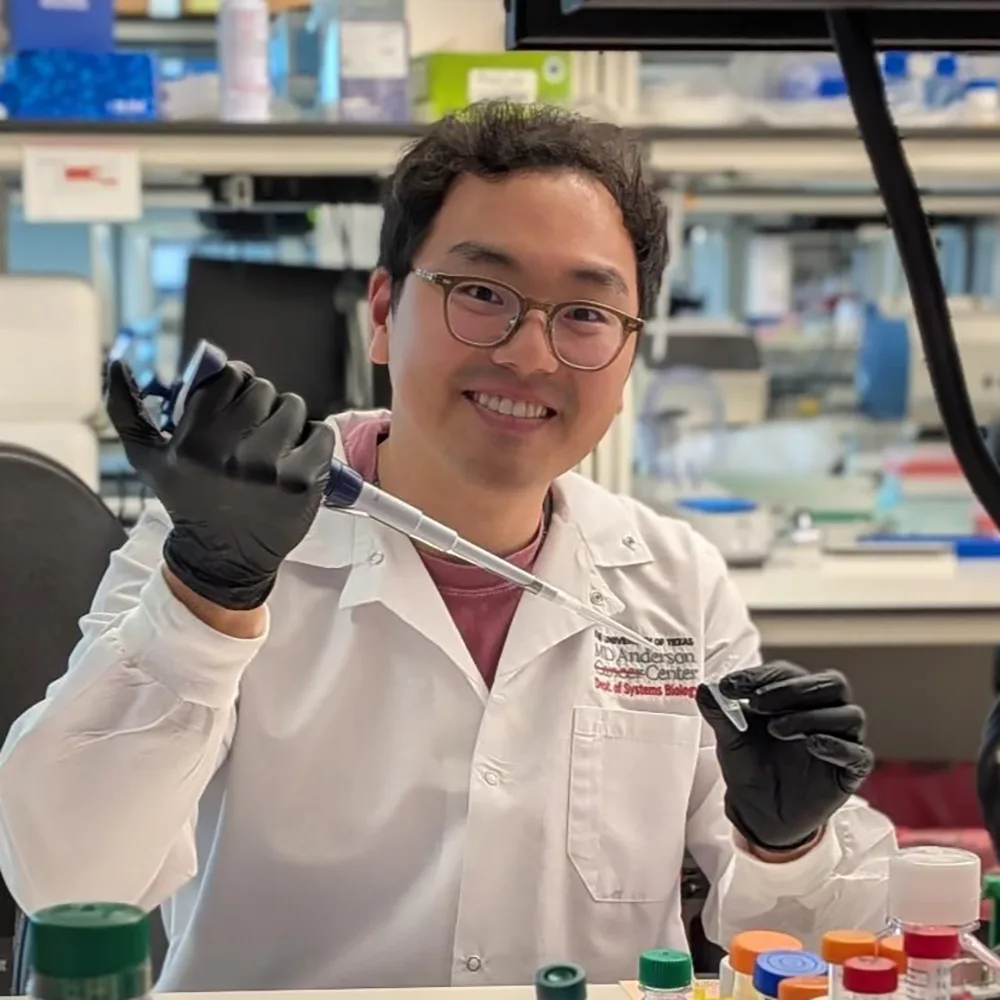
Minsoo Kim, PhD is a postdoctoral fellow in the laboratory of Nicholas Nevin, PhD at the University of Texas MD Anderson Cancer Center. Dr. Kim completed his undergraduate studies at Johns Hopkins, where he worked with prostate cancer biomarkers in circulating tumor DNA. He then completed a master’s in bioinformatics at the University of Minnesota, where he worked on copy number and mutational data from whole-genome sequencing of colorectal cancer patients to identify markers for personalized treatment. He then joined the Weill Cornell PhD program in Computational Biology and joined the laboratory of Sohrab Shah at Memorial Sloan Kettering for his graduate studies. During his PhD work, Minsoo developed computational methods to study mitochondrial mutations in single cell DNA sequencing data, which showed how mitochondrial-nuclear genome interactions contribute to adaptive states in genomically unstable cancers.