

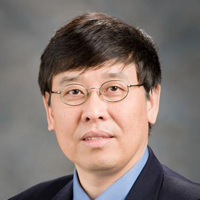
Titles and Affiliations
Professor of Medicine and Cancer Biology
Department of Experimental Therapeutics
Research area
Developing novel approaches to treat and prevent metastasis in HER2-positive breast cancer.
Impact
Once breast cancer spreads to other tissues in the body—a process called metastasis—it has become resistant to many therapies and is incurable. Lack of response to current standard-of- care, including novel targeted cancer therapy, is the primary cause of deaths from breast cancer. Immunotherapy, treatment that harnesses a person’s own immune system to fight cancer, has achieved remarkable progress in recent years in some types of cancer. Chimeric antigen receptor (CAR) T-cell therapy is an emerging form of immunotherapy that engineers a patient’s own immune cells to recognize specific markers on cancer cells, and has achieved remarkable success treating blood cancers. Translating this success to solid tumors like breast cancer has proven far more difficult, however, because these tumors form a dense mass packed with immune-inhibitory cells and physical barriers, such as dense stroma and abnormal blood vessels, creating a hostile environment that limits CAR T-cells’ ability to enter the tumor and carry out their cancer-killing function. Dr. Fan is investigating strategies to help CAR T cells overcome these obstacles and successfully penetrate and destroy HER2-positive breast tumors.
Progress Thus Far
A protein called vascular endothelial growth factor A (VEGFA) is a major culprit behind the physical and biological barriers that block CAR T-cell therapy in solid tumors. Dr. Fan’s team has developed a new drug candidate, a bispecific antibody, that uniquely inhibits VEGFA function specifically within solid tumors. This bispecific antibody destroys VEGFA in the tumor bed by tethering it to cancer cells that overexpress HER2, enabling the immune system to target and degrade both VEGFA and the HER2-overexpressing cancer cells at once. The team hypothesizes that this bispecific antibody can help CAR T cells penetrate breast tumors and carry out their tumor-killing activity more effectively.
What’s next
In the coming year, Dr. Fan and his team will carry out experiments in laboratory models to test whether their bispecific antibody can enhance the antitumor activity of CAR T-cell therapy. If successful, this work will validate a promising new strategy for overcoming one of the central barriers to using CAR T-cell therapy against solid tumors.
Biography
Zhen Fan was awarded his medical degree in 1985 from the Medical School of Shanghai Medical University, one of China’s most prestigious medical schools, and completed additional graduate studies there in 1988. His medical residency and oncology research training were at Zhong Shan Hospital of Shanghai Medical University. In 1991, he joined Dr. John Mendelsohn’s laboratory as a post-doctoral research fellow at Memorial Sloan Kettering Cancer Center and focused on studies of targeting the epidermal growth factor receptor as an approach for cancer therapy. From 1994 to 1995, he was a Research Associate in the Program of Molecular Pharmacology and Therapeutics, Sloan Kettering Institute for Cancer Research; in 1996, he joined the Memorial Sloan Kettering faculty as an Assistant Molecular Biologist in the Department of Medicine. In late 1996, Dr. Fan moved to Houston and joined the faculty of the University of Texas MD Anderson Cancer Center, starting as a tenure-track assistant professor. He is currently professor of medicine and cancer biology in the Department of Experimental Therapeutics in the Division of Cancer Medicine at MD Anderson, where he directs an independent laboratory focused on research for better understanding of cancer cell signaling and metabolism and for development of new technologies of antibody engineering and therapeutics. Dr. Fan has made considerable contributions to our understanding of regulation of cancer cell signaling in breast cancer, aimed at identifying novel targets for innovative breast cancer treatment. His research has been funded by multiple federal, state, and private sources.